Potholes

City crews fill potholes in the spring when rain and thaw conditions create ideal conditions for potholes to form on our streets. If you find one before we do, check out our winter road maintenance priority map and help us by completing a service request. The City does not maintain Highway 97, Westbank First Nation roadways or Westside Road.


Each year, City crews will fill more than 750 potholes on our roads.

Potholes can develop along roadways due to moisture getting through the asphalt surface followed by repeated freeze/thaw cycles and vehicle traffic. Temporary pothole repairs are completed during the winter months when roads are clear of snow and ice and permanent repairs occur during the spring/summer months.

To report a pothole on City of West Kelowna roads, submit a service request.

The City does not maintain Highway 97, Westbank First Nation roadways or Westside Road.

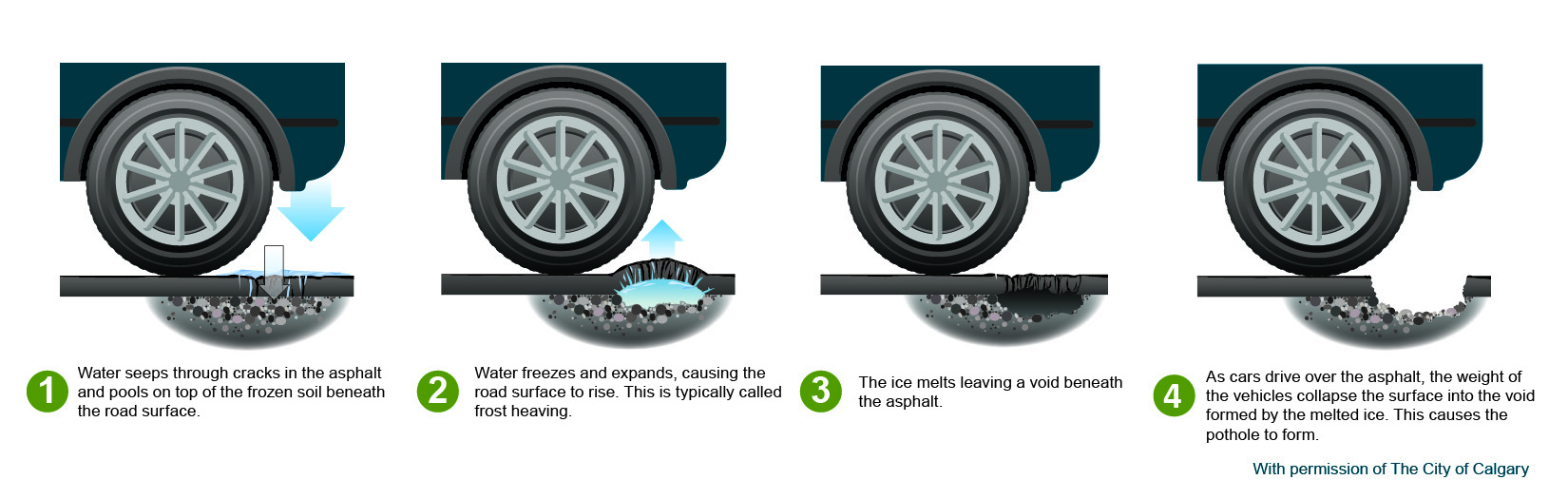
A pothole is a type of failure in asphalt pavement, caused by the presence of water in the underlying soil structure followed by repeated freeze/thaw cycles and vehicle traffic.

Potholes may require reactive emergency repair, followed by more substantial semi-permanent repairs when weather conditions improve.

The short answer: Water!

  • Water seeps through cracks in the pavement and softens the roads base, collects and then freezes.
  • When the water freezes, it expands and forces the pavement up. Traffic further stresses the expanded pavement.
  • Warmer weather and the sun then dries up the water underneath, leaving a hole under the pavement.
  • With no base, the pavement is weakened and collapses under the weight of traffic.
  • A pothole is then formed where the pavement collapsed. Wear from additional traffic can then expand the hole.

Temporary pothole repairs are completed during the winter months when roads are clear of snow and ice and permanent repairs occur during the spring/summer months.

Potholes are usually repaired in live traffic conditions. A typical pothole and patch repair crew consists of two to five people and depends on the location, scope of work and equipment.

Please slow down and use caution when driving in cone zones to keep our crews safe.

Temporary winter repairs include:

  • Crews remove loose material from inside the pothole and make every effort to dry it out as much as possible.
  • Crews then use high-performance pothole patching materials designed to fill potholes quickly during winter season when asphalt plants are closed locally. This material can be used when there is presence of some water and does hold up better than traditional asphalt cold mix however it can breakdown when excess water continues to be introduced before it cures.
  • The patching material is packed by hand and then compacted by traffic as it cures.

Permanent spring and summer repairs include:

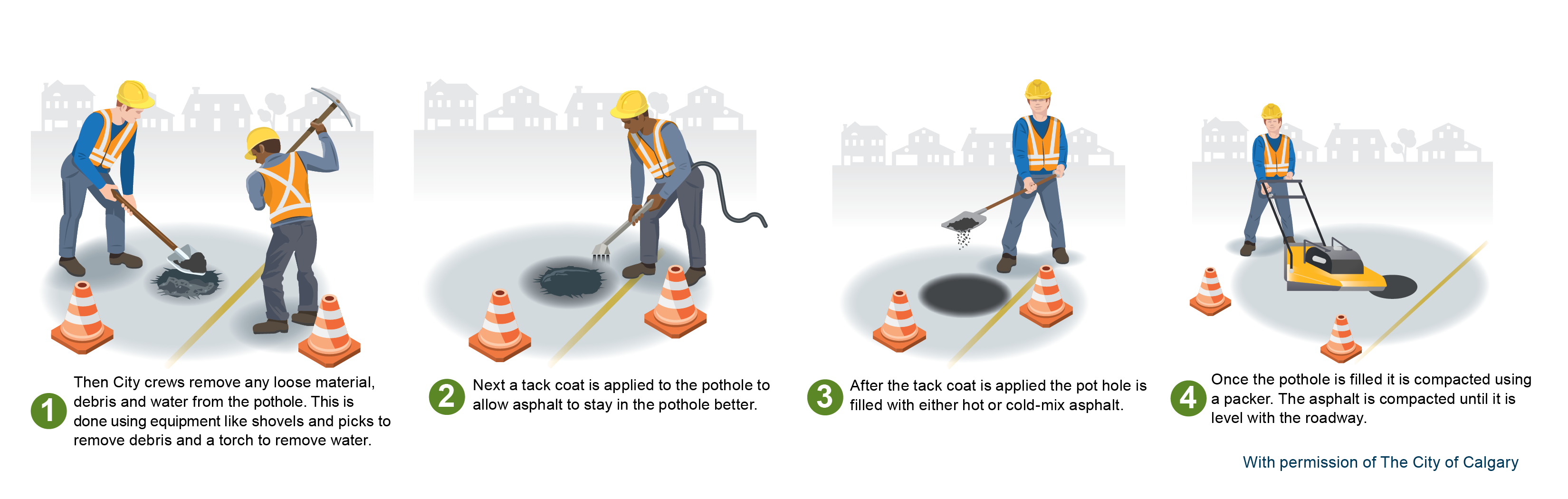
  • Crews remove loose material from inside the pothole and make every effort to dry it out as much as possible.
  • An asphalt tack material is placed in the hole and then it is filled with asphalt to seal the hole and create the repair
  • Crews use a combination of warm or hot-mix asphalt along with an infrared heater to complete these longer-term repairs
  • In more problematic locations, City crews use an infrared heater to re-heat the roadway around a hole, add virgin material and re-compact creating a blended and seamless repair that will not allow water to penetrate going forward.

Note: Repairing potholes is an important part of maintaining City of West Kelowna’s road network, however, the winter freeze and thaw cycles can undo temporary repairs quickly. When this happens, City crews revisit and refill as soon as possible until more permanent repairs can be completed starting in mid-spring and continuing into late summer.
Crews patrol Priority 1 and 2 roads and fill potholes as they are located.

City crews also inspect all potholes that citizens report and then prioritize repairs based on safety. Safety includes size, location and traffic volume.

  • Priority 1 roads with a pothole greater than eight inches by eight inches will repaired within two days.
  • Priority 2 and 3 roads with a pothole greater than eight inches by eight inches will repaired within three days
  • Smaller potholes will be monitored and repaired as time and resources allow.

To report a pothole on City of West Kelowna roads, submit a service request.

Sign up for City News and Alerts!

Stay up to date by subscribing to receive city news and alerts directly to your inbox.